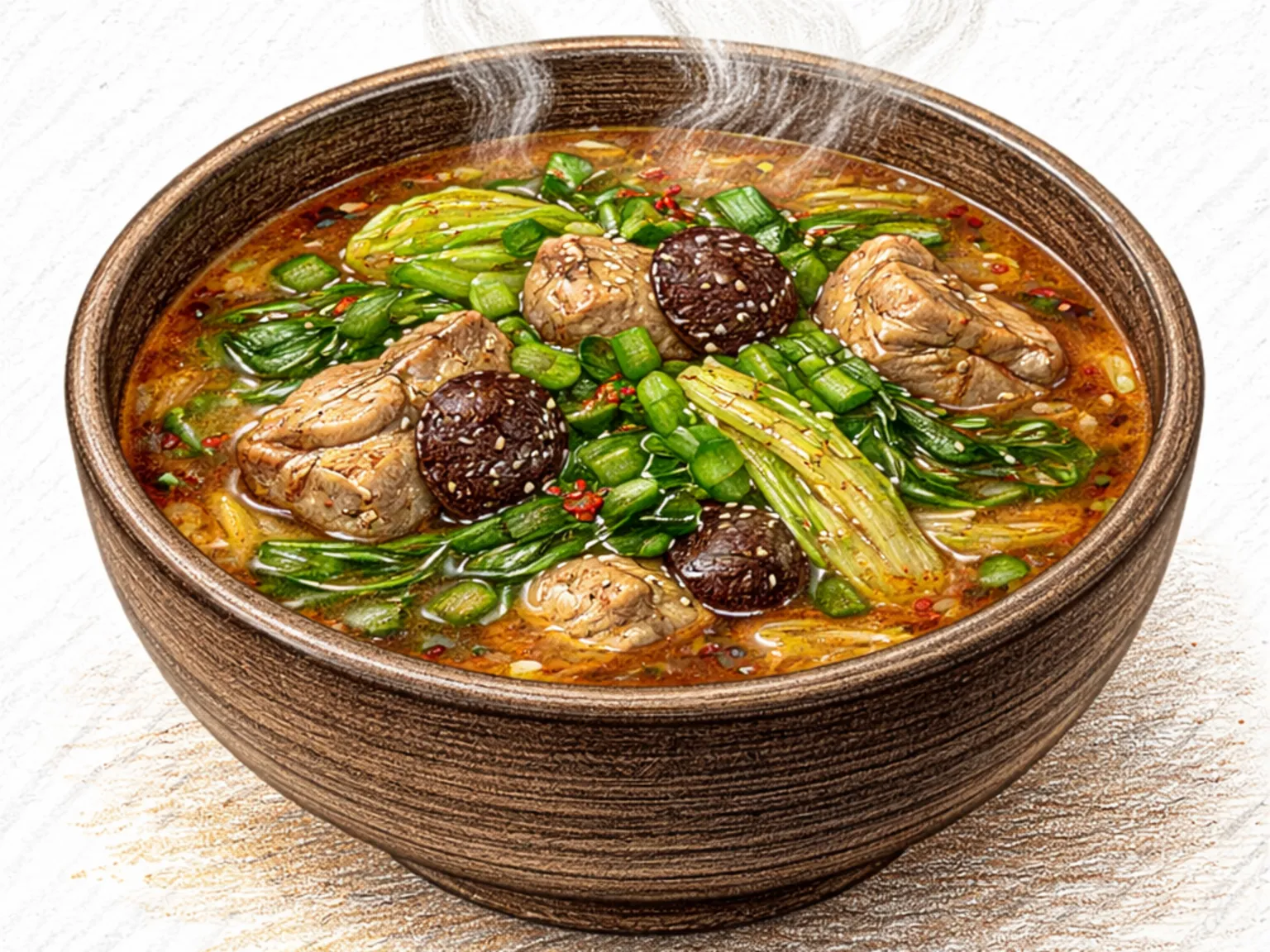
용마해장국

Yongma Haejangguk is one of Seoul's most celebrated hangover soup destinations, tucked deep inside an alley off Yongma Park-ro 5-gil in Mangwoo-dong, Jungnang-gu, and previously featured on Baek Jongwon's Three Great Emperors. The restaurant operates on a single-item menu, so orders are placed automatically — one bowl per person — the moment guests sit down. The foundation of the experience is a clear broth made from beef neck bones simmered for extended hours, with fat meticulously skimmed away until the surface is as clean as naengmyeon broth, yet carrying a wave of deep umami that builds with every spoonful. The savory, refreshing broth works equally well as a straightforward meal, a drinking companion, or a morning-after remedy, earning the restaurant a near-sacred status among soup devotees. The seonji is the other point of pride: its texture is pudding-soft, bouncy, and entirely free of any gamey odor, dissolving gently on the palate. The crisp bite of bean sprouts and the earthy warmth of ugeoji round out the bowl, leaving a clean, settled feeling in the stomach after the last spoonful. A mound of minced garlic arrives atop the broth, and diners can customize with black pepper, chili oil, or cheongyang chili, though experiencing the clear broth unadorned first is the recommended approach. When the temperature is too hot, cooling a spoonful with kkakdugi liquid is a useful technique. Among the banchan, the gochu-jangajji stands out — sweet and spicy in equal measure, it pairs so well with the soup that it is sold separately to take home. The seokbakji and kkakdugi also serve as excellent supporting players that highlight the broth's clarity. Banchan is available at a self-service station. A meat-only version is offered for those who cannot eat seonji, and takeout is available. The lunch rush creates significant waits, so arriving early in the morning or after 1:30 PM is the strategic move. Break time begins at 2 PM, but only the kitchen pauses — the restaurant itself remains open. No dedicated parking exists; nearby paid lots or, on Sundays, the parking area of a nearby elementary school serve as alternatives.