나정순 할매 쭈꾸미

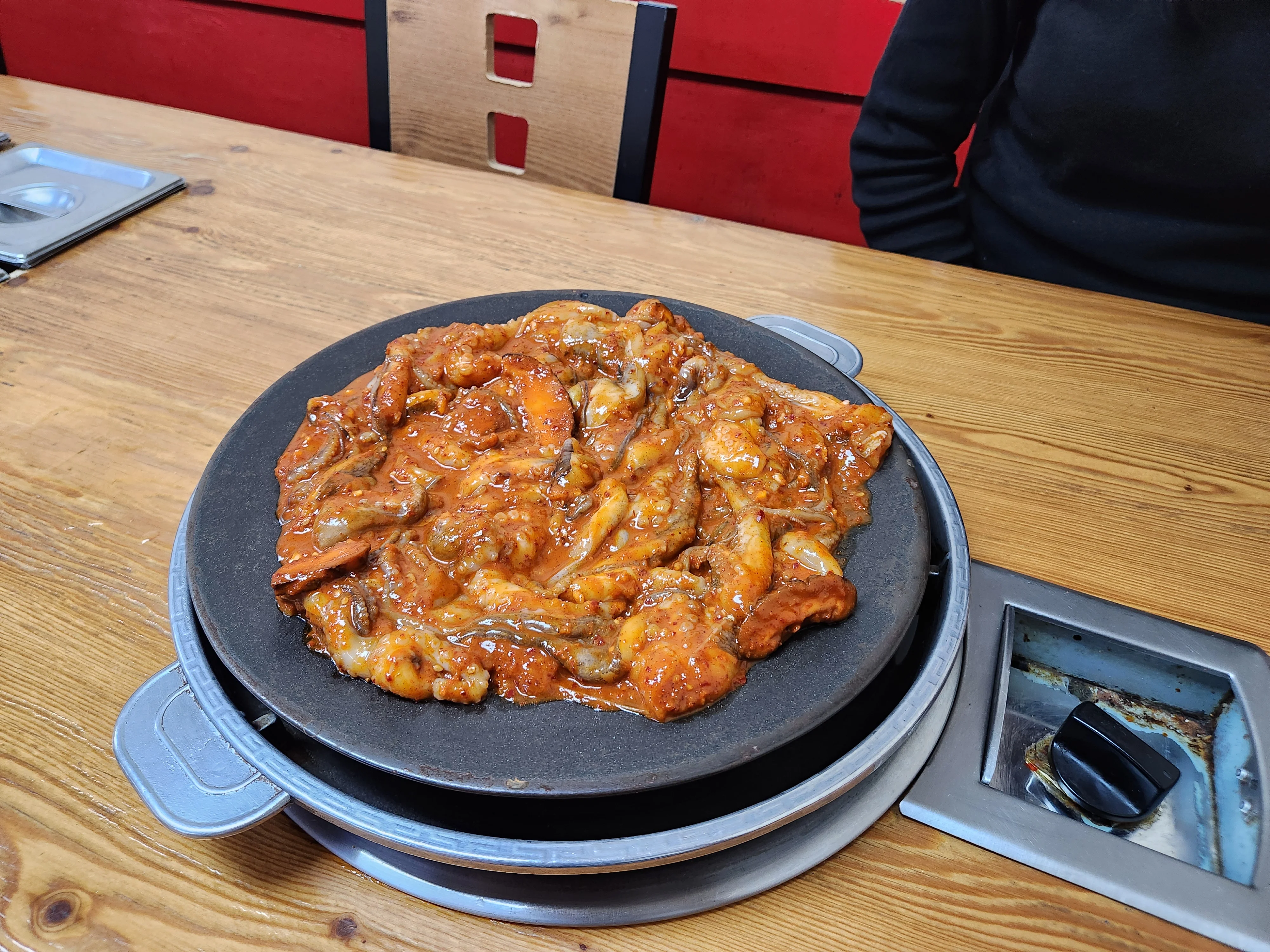
Najeongsun Halmae Jjukkumi is the original jjukkumi restaurant in Seoul's Yongdu-dong octopus alley, Dongdaemun-gu, and consistently draws the largest crowds among the many jjukkumi shops lining the street. The defining quality of this kitchen is how the baby octopus behaves under prolonged cooking: where most jjukkumi turns rubbery with extended heat, here the pieces remain tender and chewy even as the sauce reduces and concentrates, creating an unusually harmonious meld of protein and seasoning. The spice level is substantial but falls into the category of addictive heat rather than punishing burn — the kind that keeps chopsticks moving rather than reaching for water. Adding a generous pile of raw garlic cloves and letting them cook through amplifies both the heat and the savory depth to their maximum. Wrapping the octopus in perilla leaves with glass noodles softens the intensity, and palate-cleansing bites of pickled radish and carrot between rounds keep the experience manageable. The ordering system is automatic: seating triggers a per-person serving without a separate order step. The meal's conclusion is bokkeumbap — fried rice prepared tableside by staff who gauge proportions by eye, tossing it in the residual sauce until every grain absorbs the concentrated flavor. An alternative finish involves moistening the rice with the remaining broth and topping it with octopus pieces. The doenjang-jjigae that accompanies the fried rice order is mild and serves as an effective counterbalance to the spice. A small gesture of hospitality awaits at checkout, where the grandmother hands out yogurt drinks. The physical environment carries some drawbacks. Table spacing is extremely tight — descriptions of feeling packed in are not exaggerations — and overall cleanliness does not reach pristine standards. Entry requires the entire party to be present, so coordinating arrival times matters. Driving is discouraged because parking in the area is nearly impossible; public transit is the practical choice. Takeout portions are doubled in quantity, but reheating at home lacks the wok-fired char that defines the in-restaurant experience. Prices have climbed noticeably over the years, yet the flavor has remained consistent enough to keep regulars returning on a cyclical basis.