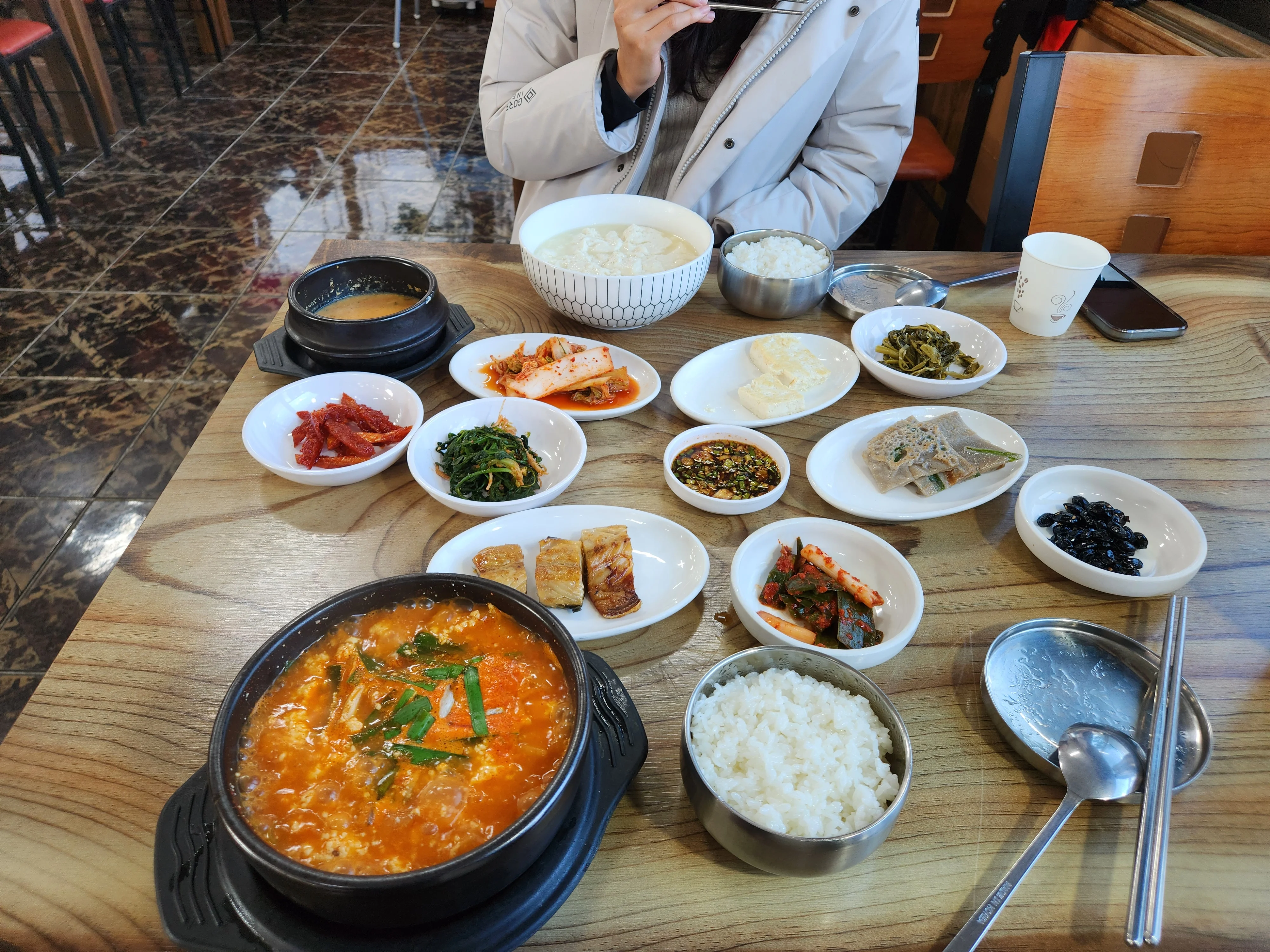
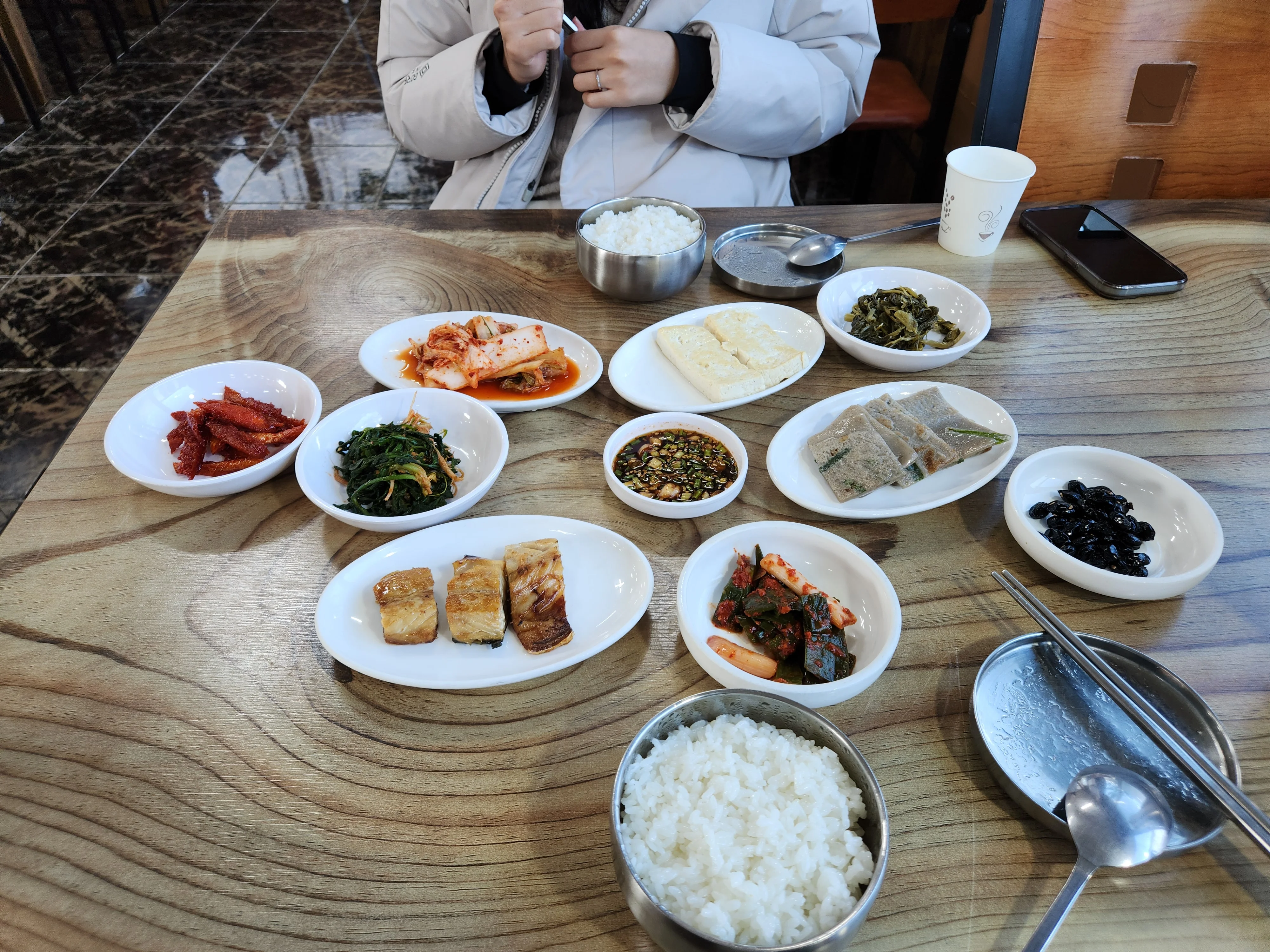
- Cuisine
- Korean (음식점)
- Address
- Gangwon-do Sokcho-si Nohak-dong Wonamhaksapyeong-gil 120
Chowon Sundubu uses Korean-grown soybeans to make tofu in Sokcho's Haksapyeong tofu village. The plain sundubu places white, softly set curds in a clear broth, keeping the bean aroma and the delicate structure of newly coagulated tofu at the center of the bowl. Heavy seasoning is not built into this version. A spoon breaks the curds into soft folds, and the soybean pulp served alongside introduces a grainier texture made from another part of the same bean-making process. Eating the pulp and curds separately makes their difference in moisture and particle size apparent without adding another sauce. The red jjamppong sundubu follows a different preparation. Squid, clams, shrimp, and a whole abalone cook in a spicy seafood broth packed with soft tofu. The squid and shellfish contribute firmer bites between the curds, while the red soup carries chili and seafood flavors that do not appear in the clear version. Modubu is pressed enough to hold its shape and is sliced into thicker pieces. The black soybean version, heukdubu, has a darker color and a more defined bean character than the white sundubu; a small portion may also appear among the side dishes, allowing both pressed and unpressed tofu to be eaten at one table. The banchan extends beyond kimchi. A thin buckwheat pancake brings a lightly browned grain surface, acorn jelly adds a cool and elastic texture, dried pollack contributes fibrous fish, and stir-fried anchovies add small crisp, savory pieces. These sides are physically distinct from the fragile curds and provide changes in temperature and resistance between spoonfuls of hot soup. Hwangtae haejangguk is the main non-tofu soup. Shredded dried pollack cooks in broth, creating a fish-centered bowl for a diner who does not want either plain or spicy sundubu. A small piece of nurungji comes at the end, replacing the moisture of the soups with the dry crunch and toasted aroma of scorched rice.
Quick read
- Why go
- Moderate price range
- Best for
- Solo dining
- Plan before you go
- 732 Google Maps reviews make this a useful shortlist pick.
What to order
- Start with
- 짬뽕순두부
- Then consider
- 흑두부
- How to enjoy it
- A spoon breaks the curds into soft folds, and the soybean pulp served alongside introduces a grainier texture made from another part of the same bean-making process.
Dataset context
How this listing compares
- Within this cuisine
- #292 of 676 by the published comparison signal
- Korean
- Within this area
- #23 of 69 by the published comparison signal
- Sokcho
- Review depth
- 1.0× the cuisine median (median 703)
Analysis generated 2026-07-30 from 4,138 Korea Eats records. Ratings and review counts can change. This is not a personal review or quality guarantee. Check current details on the linked map.
Choose your next step
More in this district
Cheongchosu Mulhoe Sokcho Bonjeom
청초수물회 속초본점
Kim Young-ae Sundubu Bonjeom
김영애 순두부 본점
Daecheong Maru
대청마루
Chilseong Joseonso
칠성조선소
Manseok Dakgangjeong Bonjeom
만석닭강정 본점
Dancheon Sikdang
단천식당
Popular Korean spots
Ujin Haejangguk
우진해장국
Yuchi Hoegwan
유치회관
Jungang Haejang
중앙해장
Gojipdol Ureok Jeju Gonghang
고집돌우럭 제주공항점
Mugyodong Bugeogukjip
무교동북어국집
Samcheong-dong Sujebi
삼청동수제비