Baekchon Makguksu 백촌막국수
백촌막국수
- Cuisine
- Noodles (막국수 전문점)
- Address
- Gangwon-do Goseong-gun Toseong-myeon Baekchon1-gil 10
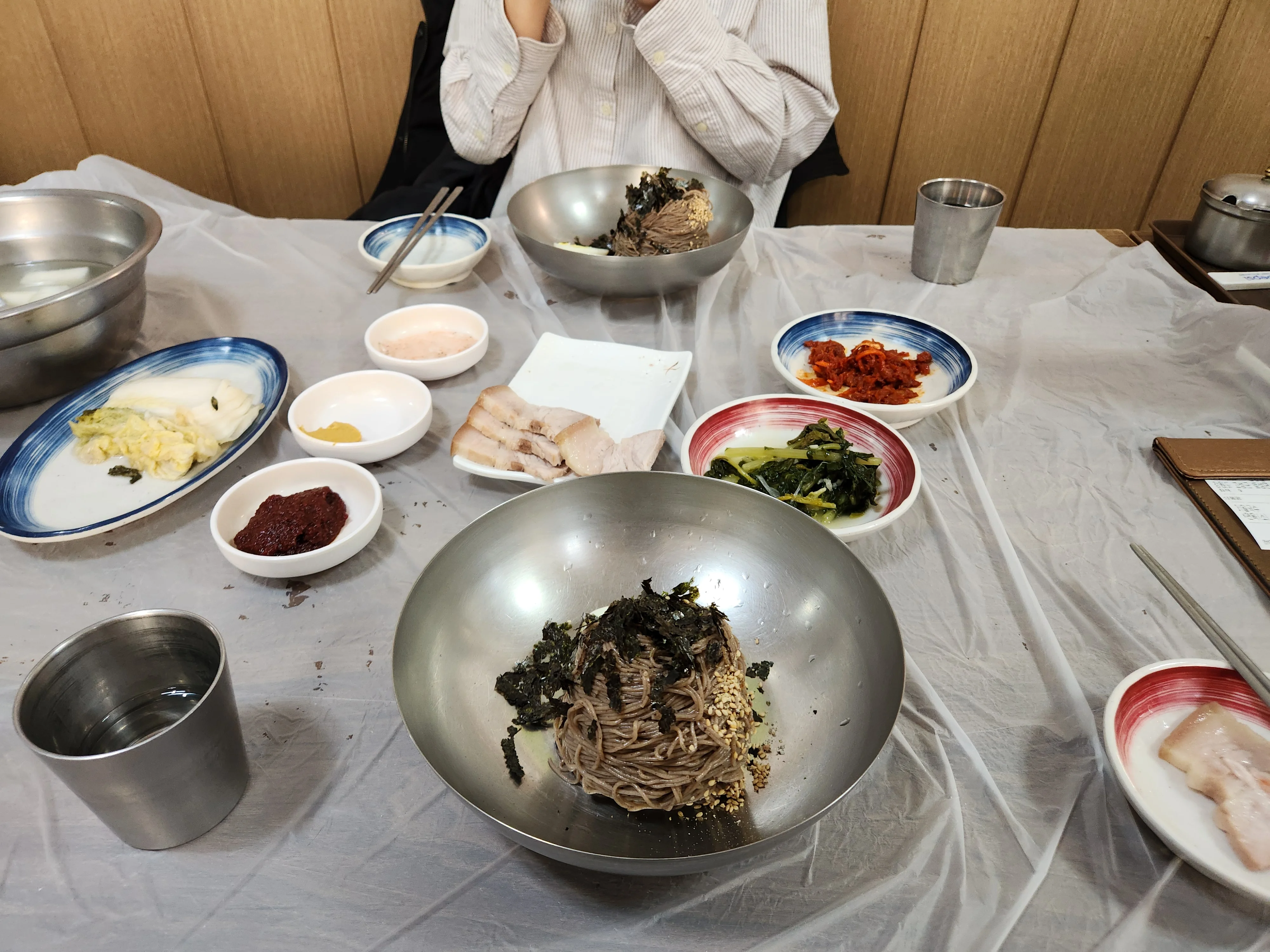
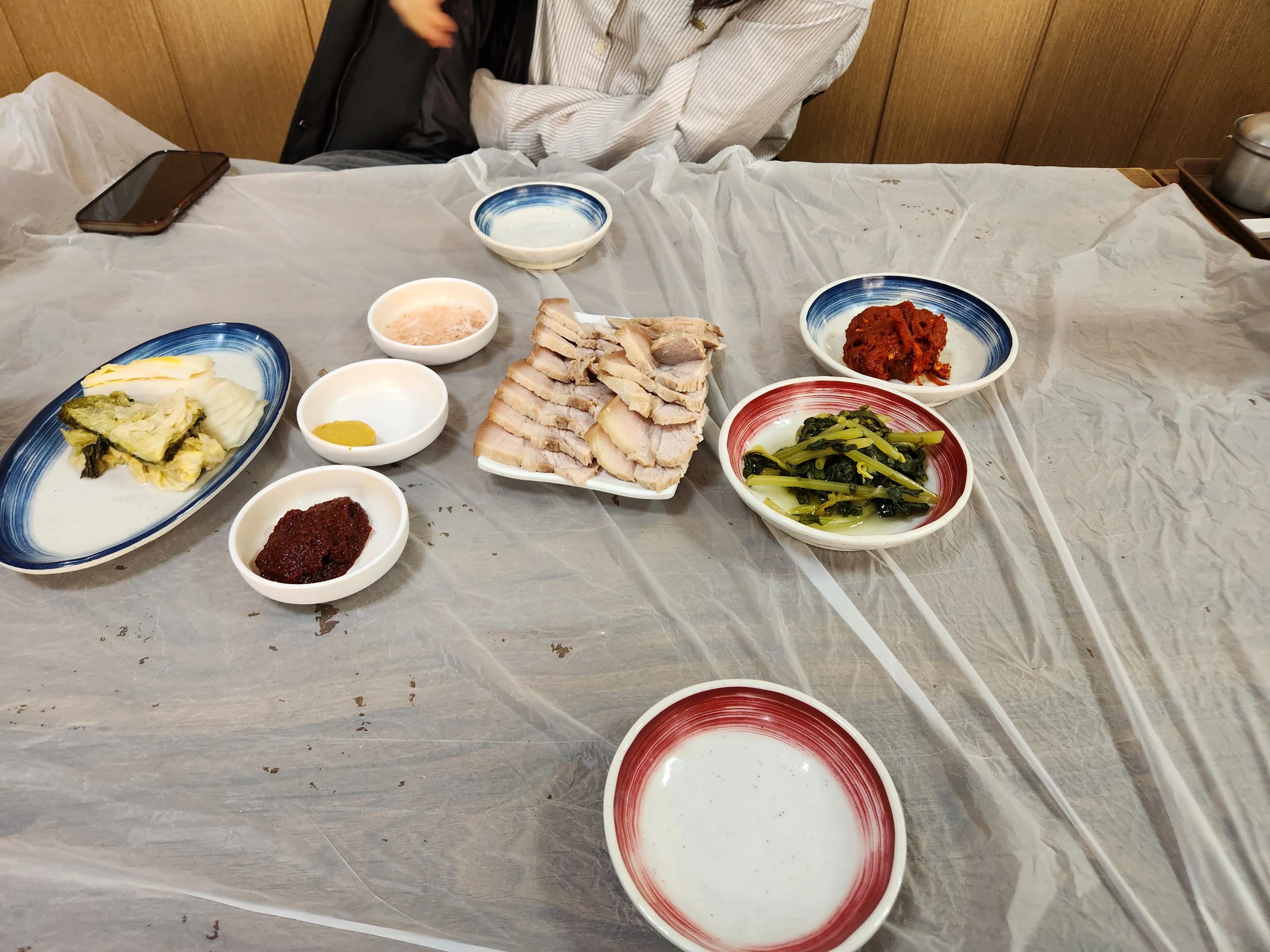
Baekchon Makguksu is a buckwheat noodle restaurant at 10 Baekchon 1-gil in Toseong-myeon, Goseong, Gangwon Province. Its low tables, floor seating, courtyard, and converted rural-house layout retain the scale of a countryside dining room rather than a large modern noodle hall. The buckwheat noodles are noticeably thinner than many Gangwon-style makguksu noodles. They remain soft with light elasticity instead of breaking with a coarse, dry texture. Dongchimi broth arrives in a separate vessel, allowing the bowl to move through several stages. The noodles can first be mixed with oil and red dadaegi paste, then loosened gradually with the cold radish-water broth. Vinegar and mustard add acidity and sharpness independently, so the same bowl can shift from a concentrated bibim style toward a broth-based preparation. Pyeonyuk on the menu is boiled pork made from the front leg. The slices carry more lean meat than belly fat and stay moist enough to wrap around the cold noodles. A regular noodle portion can be paired with pyeonyuk, while a larger noodle size changes the amount without adding another dish. A quarter of a boiled egg, yeolmu kimchi, and white kimchi complete the bowl and add egg richness plus two fermented vegetable flavors distinct from the dongchimi. Extra side dishes are collected by taking the empty dish to the kitchen. The restaurant accepts the full food order on the initial ticket and does not add pork or noodles afterward, so each table selects noodle sizes and the quantity of pyeonyuk together. Tableling manages the waiting sequence. A dedicated lot serves cars, while most dining places remain low floor seats. The meal's defining contrast comes from thin buckwheat noodles, cold dongchimi, red seasoning, warm boiled pork, and crisp fermented vegetables, all adjusted at the table rather than fixed in a single water or mixed-noodle format. The broth remains separate until it is poured, so it does not dilute the red paste before the diner chooses the balance. Yeolmu kimchi contributes green radish leaves and chile seasoning, while white kimchi supplies a paler fermented profile. The boiled pork can be eaten alone, wrapped with noodles, or placed beside the two kimchis. This sequence separates the noodle's buckwheat aroma, the radish broth, and the pork before they are combined.
Quick read
- Why go
- Moderate price range
- Best for
- Solo dining
- Plan before you go
- A wait is possible
What to order
- Start with
- 막국수
- Then consider
- 수육
- How to enjoy it
- The restaurant accepts the full food order on the initial ticket and does not add pork or noodles afterward, so each table selects noodle sizes and the quantity of pyeonyuk together.
Dataset context
How this listing compares
- Within this cuisine
- #8 of 206 by the published comparison signal
- Noodles
- Within this area
- #2 of 20 by the published comparison signal
- Goseong
- Review depth
- 4.0× the cuisine median (median 749)
Analysis generated 2026-07-30 from 4,138 Korea Eats records. Ratings and review counts can change. This is not a personal review or quality guarantee. Check current details on the linked map.
Choose your next step
More in this district
Bada Jeongwon
바다정원
Square Root Coffee & Bakery
스퀘어루트 커피앤베이커리
Yeongsunne Hoetjip
영순네횟집
Ocean to You Dayeon
오션투유다연
Gesgeora
게섯거라
Coffee Go
커피고
Popular Noodles spots
Haengjusanseong Wonjo Guksu Jip
행주산성 원조국수집
Gogiri Makguksu
고기리막국수
Ollae Guksu
올래국수
Jinjung Uyukmyeongwan Bonjeom
진중 우육면관 본점
Jinjujip
진주집
Jinju Hoegwan
진주회관